

Sourcing bespoke products – items custom-designed and manufactured to specific requirements – offers hospitality businesses (hotels, restaurants, cafes) the opportunity to create unique guest experiences, perfectly integrate elements into their design scheme, and meet specific functional needs. Unlike procuring standard, off-the-shelf items, commissioning bespoke work involves a closer collaborative relationship with the supplier/manufacturer. Success hinges on clear communication, aligned expectations, and thorough due diligence before committing to a project. Asking the right questions upfront is crucial for navigating this process effectively and mitigating potential risks.
This guide outlines key areas of inquiry and specific questions to pose to potential bespoke hospitality product suppliers to ensure they possess the capabilities, processes, and quality standards necessary to transform your vision into reality.
1. Capabilities and Expertise:
Understanding the supplier’s core competencies and relevant experience is fundamental.
- What is your specific experience manufacturing [Type of Product – e.g., custom casegoods, bespoke seating, unique wood amenities] for the hospitality/HORECA sector? (Verifies industry understanding vs. general manufacturing.)
- Can you provide examples or a portfolio of past projects similar in scale, complexity, or material to ours? (Demonstrates proven ability.)
- What manufacturing processes and equipment do you utilize in-house versus potentially outsourcing? (Clarifies control over production.)
- What are the technical limitations or design constraints we should be aware of based on your capabilities? (Sets realistic expectations.)
2. Design and Development Process:
Clarity on how your design vision will be translated into a manufacturable product is vital.
- What is your standard process for working with client-provided designs (e.g., drawings from architects/designers)? (Understand their workflow.)
- Will detailed shop drawings be provided for review and approval before production begins? Who is responsible for creating them? (Essential for verifying technical details.)
- How do you handle design revisions or feedback during the pre-production phase? (Clarifies the iterative process.)
- What is your process for prototyping, if required for complex or large-volume items? Is there an associated cost? (Confirms ability to test/validate designs.)
- Who will be our primary point of contact throughout the design and development phase? (Ensures clear communication lines.)
3. Materials, Quality Control, and Sustainability:
Ensuring the final product meets quality, durability, and potentially ethical standards requires specific inquiry.
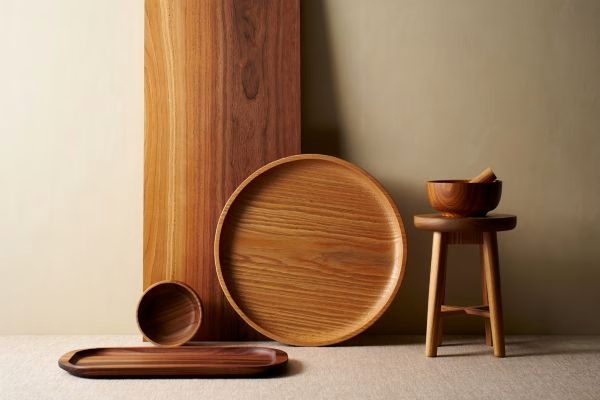
- What types of materials (specific wood species, metal grades, fabric standards, etc.) do you typically work with and recommend for hospitality applications? Can you source specific requested materials? (Confirms material suitability and sourcing ability.)
- Can you provide detailed specifications or samples of materials and proposed finishes for approval? (Allows for tactile and visual verification.)
- What quality control procedures do you have in place at different stages of production (material inspection, fabrication, finishing, final assembly)? (Understand their commitment to quality assurance.)
- How do you handle non-conforming products or defects discovered during QC or upon delivery? What warranty do you offer on your products? (Clarifies accountability and post-delivery support.)
- (Optional but Increasingly Important): Can you provide information on your material sourcing practices regarding sustainability or environmental certifications? (Addresses ethical/environmental considerations.)
4. Production, Lead Times, and Logistics:
Practical considerations around timing and delivery are critical for project scheduling.
- Based on our preliminary project scope, what is your estimated production lead time after final design approval? (Essential for planning.)
- What is your current production capacity, and how might a project of our scale fit into your schedule? (Assesses ability to meet timelines.)
- How will we be updated on production progress? (Determines communication frequency.)
- What are your standard procedures for packaging products to prevent damage during transit? (Ensures product protection.)
- What are the shipping terms (e.g., FOB, CIF)? Can you coordinate logistics to [Our Location], including handling international shipping and customs if applicable? (Clarifies delivery responsibility and capability.)
- How do you typically handle potential production delays? (Understands contingency planning.)
5. Cost, Commercial Terms, and Contracts:
Transparency in pricing and contractual obligations prevents future misunderstandings.
- Can you provide a detailed quotation outlining all included costs (materials, labor, finishing, packaging) and any potential exclusions (shipping, installation, taxes)? (Ensures pricing clarity.)
- What are your standard payment terms and schedule for bespoke projects? (Clarifies financial commitments.)
- How are scope changes or additional requests handled once production has commenced, both in terms of cost and timeline impact? (Defines process for variations.)
- What documentation (e.g., contract, terms and conditions) will govern the order? (Requests formal agreement details.)
Conclusion
Commissioning bespoke hospitality products requires a diligent approach to supplier selection. Asking targeted, comprehensive questions across these key areas allows buyers to accurately assess a supplier’s suitability, establish clear expectations, and foster a collaborative partnership built on transparency and trust. This thorough inquiry process is fundamental to mitigating risks and successfully transforming a unique design vision into tangible, high-quality products fit for the demanding hospitality environment.
For projects requiring expertise in custom wood products specifically designed for hospitality, manufacturers like Artos Wood engage in this detailed consultation process to ensure successful project outcomes.