

The term “commercial grade” is ubiquitous in specifications for products destined for the HORECA sector (Hotels, Restaurants, Cafes). While intended to denote a higher standard of durability suitable for demanding public environments, its meaning can be ambiguous without specific context. For buyers – including designers, procurement managers, and operators – understanding the tangible attributes that differentiate true commercial-grade products from their residential counterparts is essential for making informed decisions and evaluating supplier claims accurately. This knowledge ensures specified products deliver the required performance, longevity, and long-term value.
Why Standard Definitions Matter in the HORECA Context
Hospitality environments impose significantly greater stresses on products compared to typical residential settings. Factors such as high user frequency, intensive cleaning schedules often involving potent chemicals, frequent movement of items, and unavoidable impacts necessitate enhanced product resilience. Relying solely on the label “commercial grade” without understanding the underlying standards can lead to specifying items that fail prematurely, resulting in unexpected costs, operational disruptions, and potential brand damage.
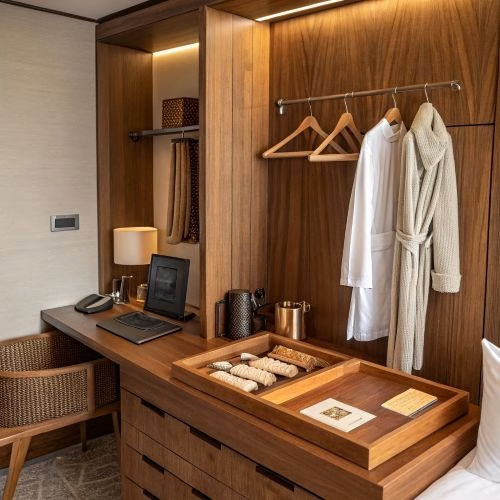
Key Components of Genuine Commercial-Grade Products
True commercial-grade suitability is not defined by a single feature but by a combination of deliberate choices in materials, construction, finishing, and design. Suppliers committed to providing genuine HORECA solutions typically address the following areas:
- Material Selection and Specification:
- Higher Performance Materials: Utilizing materials chosen for their inherent durability and resistance properties pertinent to the application. This might include denser solid hardwoods, higher gauge metals, more robust engineered wood products (with appropriate core materials and laminates), commercial-rated fabrics with high abrasion resistance (e.g., Wyzenbeek or Martindale scores), or polymers specified for impact and chemical resistance.
- Suitability for Cleaning: Materials must withstand repeated cleaning with commercial disinfectants without degrading, staining, or discoloring.
- Consistency: Reliable suppliers ensure consistency in material quality across production runs.
- Construction Methods and Joinery:
- Robust Techniques: Employing construction methods designed for strength and stability under stress. In wood furniture, this involves techniques like mortise and tenon joints, reinforced doweling, substantial corner blocking, and quality fasteners, significantly exceeding typical residential joinery. For metal items, it involves appropriate welding techniques and structural integrity.
- Reinforcement: Strategic reinforcement at key stress points (e.g., chair legs, table bases, frame connections) is common to prevent loosening or failure over time.
- Precision Assembly: Ensuring components fit together accurately and securely contributes significantly to overall product stability and lifespan.
- Finishing Processes and Materials:
- High-Performance Finishes: Application of multi-layer finishing systems specifically formulated for commercial environments. For wood, this often means catalyzed lacquers, conversion varnishes, or high-solids polyurethanes offering superior resistance to scratches, abrasion, moisture, heat, and chemicals compared to standard nitrocellulose lacquers or paints. For metals, durable powder coating or appropriate plating is typical.
- Thorough Application: Ensuring complete and consistent coverage, including edges and less visible areas, protects the underlying material from environmental factors.
- Design and Engineering for Durability:
- Stability Considerations: Designing products with inherent stability (e.g., appropriate base weight or footprint for tables, leg splay on chairs).
- Ease of Maintenance: Considering how the design facilitates cleaning and potential minor repairs.
- Anticipation of Wear: Designing elements to better withstand known stress points or common types of impact in a HORECA setting.
- (Optional but Indicative) Third-Party Testing and Certification:
- While not always applicable to fully bespoke items, adherence to relevant industry standards (e.g., BIFMA for commercial office/hospitality furniture, specific safety or fire-rating codes) indicates a supplier’s commitment to recognized performance benchmarks. Suppliers should be able to provide documentation if claims of compliance are made.
The Supplier’s Responsibility and How to Evaluate
A knowledgeable and reputable HORECA supplier actively incorporates these principles. They should be able to:
- Provide Specific Details: Clearly articulate the materials, construction techniques, and finish types used in their products. Generic answers should be a red flag.
- Explain the Rationale: Justify why specific choices were made concerning durability for the intended environment.
- Offer Samples/Mockups: Allow potential clients to physically inspect material quality, finish resilience, and construction details.
- Share Case Studies/References: Provide examples of their products successfully performing in similar high-traffic HORECA environments over time.
Conclusion
The term “commercial grade” only holds significant meaning when backed by specific, verifiable standards in materials, construction, and finishing appropriate for the rigorous demands of the HORECA industry. Buyers must look beyond the label and engage with potential suppliers to understand precisely how their products are engineered for durability and longevity. This diligence in questioning and evaluation ensures that procured items meet true commercial performance expectations, representing a sound investment rather than a potential liability.
Understanding these underlying standards is fundamental when assessing the capabilities of manufacturers, like Artos Wood, who specialize in producing durable goods designed explicitly for hospitality applications.